
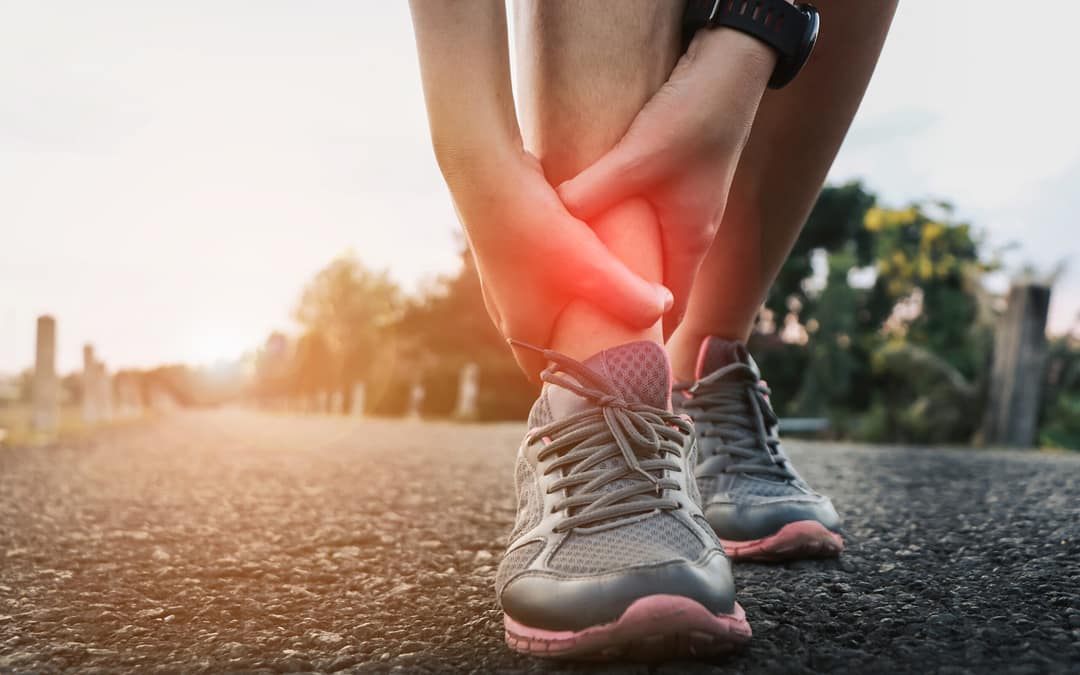
This post follows on from my previous one on how to make an ice pack. If you want to know the details, read that post first and come back. This post is looking at the overall management of an acute injury.
So, you’ve gone over on your ankle, or sprained your wrist – whatever, the exact injury doesn’t really matter – this simple advice shoujld be of use to you. That is unless the limb concerned is obviously deformed in some way, you aren’t able to move or take weight on it at all, or you have excessive bleeding. If any of those are the case, or you are in any doubt about your injury, A&E is probably your best choice.
The healing process
Before we start properly, we all need to get on the same page in terms of the healing process. When you damage some soft tissue, you may get some bleeding within the tissue from any soft tissue damage (which is the bruising you see a few days later), some swelling and pain. Right from the start, cells get delivered into the area to start the healing process – this is the start of inflammation, or the inflammatory process. So, when people think of inflammation as bad, that isn’t the case. You need inflammation in order to heal, to get better. The problems occur when you get excessive inflammation, or inflammation that is disproportionate to the injury you have sustained.
In order to manage your injury, you need to employ PRICE.
Acute injury – PRICE
This stands for:
Protection
Rest
Ice
Compression
Elevation
This did used to be called RICE, until someone decided it needed the P in front of it!
Protection
This really means protect the initial injury, which is largely covered by Rest, but also means stop doing the activity you are doing and look after the injured limb. So, you might simply get your weight off it if it’s a lower limb injury, or fold up the lower part of your t-shirt to act like a sling for a shoulder injury. That sort of thing.
Rest
If you pull a hamstring playing sport and then play again next week, you are going to keep pulling that hamstring. Rest, then, really comes in two parts.
With a brand new injury, you need to rest it. Take it very easily for the first day to see how bad things are. Can you move, can you weightbear, can you lift the arm or make a fist with your hand – simple activities that will give you an idea of the severity of the injury. Remember, if you are worried about how bad it is, do speak to a suitable health care professional. From the second or third day you can start to test it out – can you move the affected joint / limb, can you weightbear – and if you can without pain, you can start to use the limb again, provided it is pain-free of course.
There is some evidence that you can rest too much early on and not stimulate the injury to heal which can actually slow your recovery. So this is why I’m stipulating the first 48-72 hours before you start testing things out.
The second part to resting a new injury is reducing your overall level of activity to avoid aggravating the problem / causing pain. This might mean you aren’t resting completely, but you might not be playing sport or at work until the injury has improved further to allow you to do so.
Ice
Please see my previous blog on how to make an ice pack.
Ice has become a little bit controversial, with a number of researchers suggesting that it might actually prevent the normal inflammatory process from occurring. Now, as I’m trying to keep this polite, I’ll say I can’t agree. There is some evidence that if you leave an ice pack on for a long time, it stops the release of certain cells responsible for the start of inflammation, which as we know from above is something we need to occur in order to get better. But then again, we’ve always known if you keep ice packs in place for too long you can cause problems – sustain burns, cause circulatory and sensation issues etc. So, for me, it’s using the ice inappropriately and for too long that is the issue, not the ice ‘stopping’ a biological process that has been evolving for thousands of years.
I think, if you use an ice pack for 10-12 minutes every couple of hours, you are not being so aggressive as to stop a physiological process, but you will have a positive effect on pain and swelling.
Compression
If you have got some fairly significant swelling, then using a compression bandage like a tubigrip is a good idea, provided it isn’t too tight. Tubigrip, for example, should always be used doubled over, and even when it’s on your limb you should be able to get two fingers between the bandage and your skin so it isn’t too tight. Compression isn’t essential, however, and the other measures here can be more than enough.
Elevation
Basic fluid dynamics and gravity says that if your injured ‘bit’ is below your heart, it will swell more. If it is above your heart, the fluid has a chance to drain downwards and reduce the swelling. So, for a knee or ankle, laying on the sofa with your leg elevated on some cushions would be ideal. For the upper limb, having the arm supported somehow on the back of the sofa would work.
For a lower limb problem, if the injured part is more swollen at the end of the day than at the start, then it is down too much.
Just to reiterate, this applies for the first 48-72 hours. So, in that time, don’t have the leg down all the time, don’t mow the lawn, don’t immerse your injured limb in a hot bath and don’t return to sport. After that first 2-3 days, start to test things out – how does it feel to move, how does it feel to use the limb? Move and use it within pain-free limits, and try a little more each day. Injuries vary in their recovery times, and it might take time for you to build up your activity levels so you can return to normal life
If you want more guidance on management of a new injury then do get in touch and we can book an appointment. If you aren’t local to me, then we can still have a consultation with my new remote service! Or alternatively, seek out a suitably qualified healthcare professional near you.
You can follow me on social media, where I’ll be posting more content like simple rehabilitation videos.